
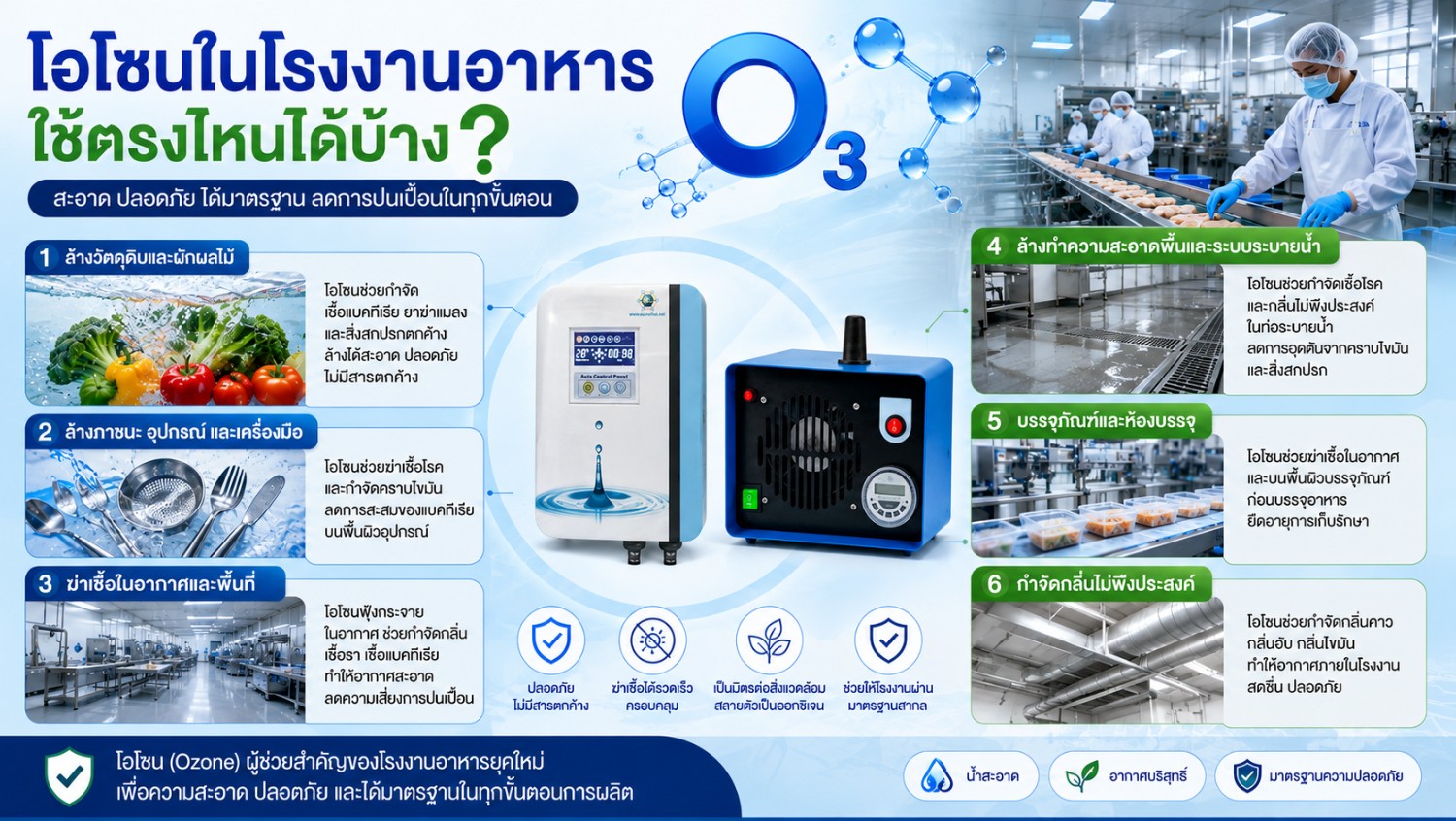
Why food plants look at ozone
Because of the constraints on chemicals in food production areas. Anything used must leave no residue on food-contact surfaces and must be rinsed off completely before the line starts, which costs time and water.
Ozone reverts to oxygen on its own, so there is no residue-rinsing step — a clear advantage for work that has to be done every shift.
Where it is typically used
- Treating production areas and cold rooms outside line hours
- Raw material stores and packing rooms
- Washing fruit and vegetables in ozonated water, to reduce microbes and agricultural chemical residues
- Recirculating water systems in the production process
- Changing rooms and staff bathrooms, which are sources of odour and microbes
- First-aid rooms and staff canteens
What to clear with QA before you start
- A treatment schedule that does not clash with line hours
- Procedures for locking off the area and posting signage during treatment
- Effects on certain materials — some rubbers degrade faster under continuous ozone exposure
- Before-and-after records for your quality documentation system
We do not claim ozone replaces your existing cleaning procedures or HACCP system. It is a supplementary tool that reduces the load at certain points, not a substitute for the whole system.
How to start
We recommend starting with a single area — a raw material store or the staff bathrooms, for example — measuring before and after, then expanding. There is no need to invest across the whole plant up front.
Want to know whether your place can be fixed?
Book a survey first — free, no obligation. If ozone is not right for your problem, we will tell you straight.
Book a free site survey