
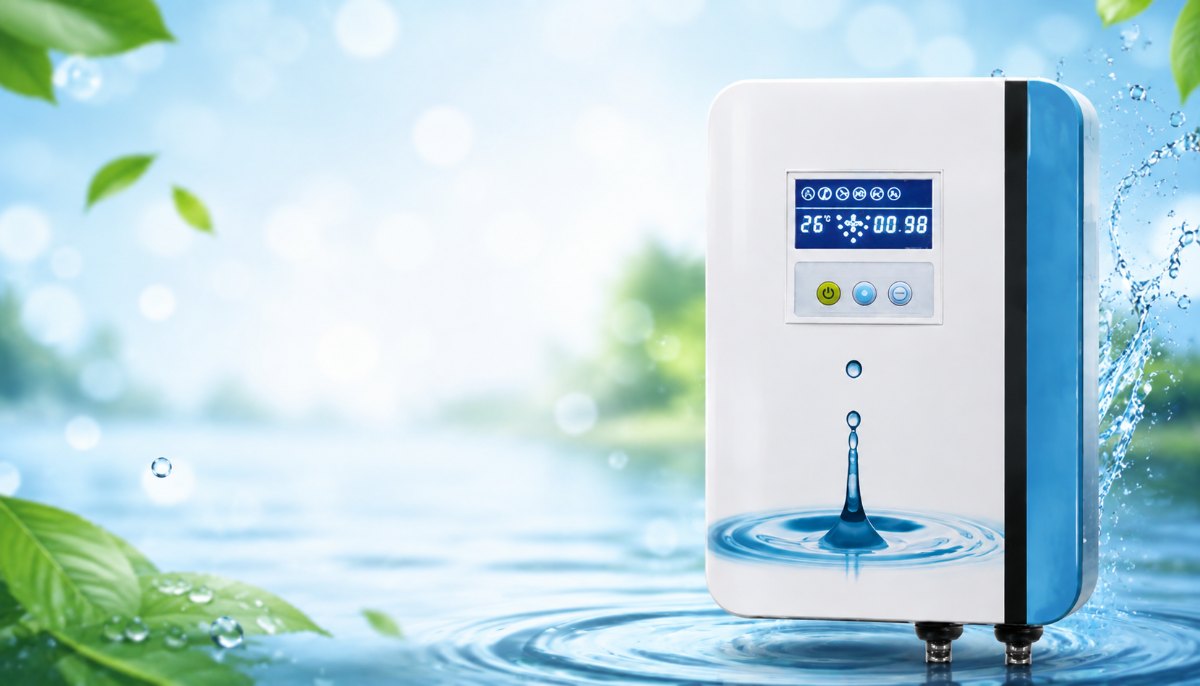
What it is used for
- Washing vegetables, fruit and meat in central kitchens and processing plants
- Process water in food and beverage production
- Swimming pools and spa baths — reduces the amount of chlorine needed
- Recirculating water systems with algae and odour problems
- Aquaculture ponds
How this differs from chlorine
Chlorine stays in the water after it has done its job, so the level has to be managed and the smell lingers. Ozone reverts to oxygen within a short time, so it does not accumulate in the water and leaves no smell.
In a swimming pool, using ozone alongside chlorine lets you lower the chlorine level, so the water does not sting the eyes and has no harsh smell. A residual chlorine level must still be maintained as required by law.
We do not recommend removing chlorine entirely from a public pool, because regulations require a residual disinfectant in the water. Ozone is used to reduce the amount, not to replace it.
How installation works
A water system has to be designed for the specific job — unit size, injection point, mixing system and contact time. That is why we always need to see the site or the pipework drawings first. There is no off-the-shelf model that fits everywhere.
What to have ready before requesting a quote
- Flow rate through the system (litres per hour, or pool size)
- Source water quality and the problems you are seeing
- Space available for the equipment
- The system you are running now
Request a Quote
Send us the area or the quantity you need. We will send a quote within one business day, along with a recommendation on which model suits your job.
Request a Quote