
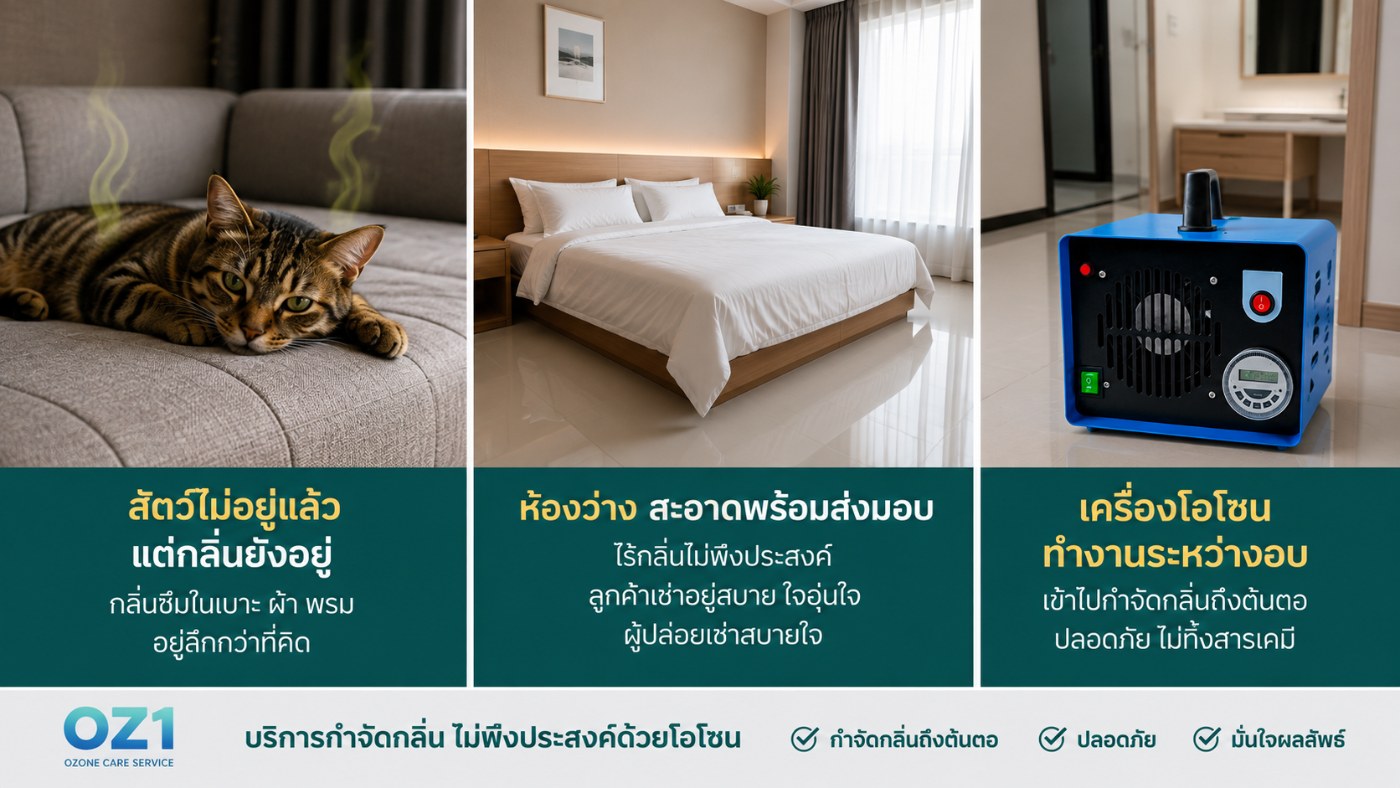
The smell is not where you are cleaning
Most people clean the spots that look dirty, but pet odour has soaked into layers a hand cannot reach — under laminate boards, into tile grout, into sofa cushion filling, and into the air-conditioning ductwork.
That is why people wash the curtains, replace the carpet and mop with strong products — then close the place up for two days, walk back in, and the smell is still there.
Four places the smell hides
- Under the floor — urine seeps into tile grout and under laminate boards, and if left long enough, into the screed underneath.
- Upholstery and mattresses — covers can be washed, but the filling inside cannot. That is where the smell is.
- The air-conditioning — hair and dander are drawn into the cooling coil and ducts, then blown back through the room every time it runs.
- Skirting boards and the gaps behind cabinets — places a broom and mop have not reached in years.
Why sprays and cleaning products do not hold
Most odour products work by masking rather than destroying the odour molecules. Once the fragrance fades the original smell is back at full strength, and sometimes the fragrance mixed with the animal smell becomes something worse than either.
Enzyme products sold for this work well on spots you can actually spray. But once urine has soaked below the floor, the product cannot get down there either.
Why ozone is different
Ozone is a gas, so it spreads anywhere air goes — into upholstery fibres, air ducts, floor joints and behind cabinets — and breaks the odour molecules down right there rather than sealing them over.
When the job is finished the gas reverts to oxygen. No residue to wipe, no re-washing fabrics, and no lingering chemical smell.
Treatment at the concentrations used for odour removal must be carried out in a room with no people no pets and no plants. Small animals, birds and fish are more sensitive to ozone than people. All of them must be moved out before we start, and the space ventilated for the specified time before they come back.
How to prepare the room
- Throw out the litter tray, pet bedding and any toys that have absorbed odour — if you keep them, the smell comes back from them
- Vacuum and mop thoroughly first, especially corners and under furniture
- Leave cupboards, drawers and the bathroom door open so the gas reaches every gap
- Take off cushion covers and pillowcases and spread them out — no need to wash them.
- Move fresh food, medicines and plants out of the room
The case where we have to be straight with you
If urine has already soaked under wooden flooring or into the screed, treatment reduces the smell a great deal but in some cases will not clear it completely, because the source is no longer in the air. Those cases need the flooring lifted in specific spots first.
We tell you at the survey whether your place falls into that category. We do not promise a complete fix in every case just to win the job.
Doing it before handover is worth more than you think
For a unit being let or sold, the smell is the first thing someone registers walking in — before they have looked at anything. It is the most common reason the price gets pushed down or the viewing goes nowhere, and nobody ever says out loud that it was the smell.
A normal-sized condo unit is usually finished within a day, ventilation included — in time to hand over to the next tenant or buyer.
Want to know whether your place can be fixed?
Book a survey first — free, no obligation. If flooring needs to come up, we will tell you straight on the day.
Book a free site survey